My Biodata

Siew Wei's Biodata (GM05156)


WHO AM I ?


Someone who’s a Squash freak
Yes I love to play squash and I use to challenge others =)

Someone who loves nutrition & always believe it can leave a positive impact to the society
I dream to be a “food doctor” (although I’m only a nutritionist), to help people live a healthy lifestyle.

Someone who likes exam but also don’t believe in exam
I do like exam because it induces me to read the book and I get to learn something new!
But I don’t believe getting good marks in exam will guarantee success in your career!

Someone who enjoys & appreciates new experiences
I appreciate what I’ve learned in the class, and the friends I know throughout the whole course.

In short, Siew Wei always has this slogan in life: "Whenever Siew Wei wants to do something, she will surely make it"


Tuesday, March 18, 2014

Lecture #7 (Part 2) - Tablets Take Their Place in the PC market


Computers, using some AI techniques like those we discussed in Chapter 4, can learn.  In the classroom while a child is using a tablet PC to learn the basics of addition, how can software be developed to aid in the learning process? 
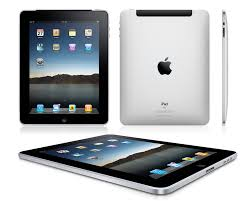


Based on the learning styles of a person, a software can be developed particular in 3 aspects to aid the learning process:

  
Aural (or Auditory) Learners
These learners generally prefer to hear information. They will typically learn most easily from lectures, group discussions, music, web chats, or talking things through. Often people with this style will process things by talking about them, rather than talk about things after they've processed them.

Aural learners benefit from the aid of a software by being able to clearly hear what is happening; being able to see what is happening is less important. They might choose to study by reading aloud with the aid of software, and they benefit from verbalizing what they've learned.

With the aid of software, a aural learner repeat the hearing process by listening to a proper pronunciation and attractive voice without the aid of a teacher and hence fasten the learning process

Visual Learners


Maps, charts, diagrams, graphic organizers, patterns and shapes—these are some of the best tools for visual learners. They tend to be "big-picture" people and are often interested in layout and design. Individuals who prefer this learning style generally can grasp information more quickly (and more thoroughly) when it is organized graphically than they would if that same information were explained aloud.
A software can assist in presenting the learning materials in the form of graphics, diagrams in helping visual learns to absorbs the learning materials in a more effective way. 
 

Kinesthetic Learners

The word kinesthetic means movement, and certainly these learners prefer to learn by doing something physical (such as a hands-on activity or a field trip). But there's more to it than that. Some researchers have defined this style as preference for learning related to experience and practice—in other words, they prefer their learning to be connected with reality. Certainly physical activities accomplish this.

A software can be designed to provide a interactive interface to allow a kinesthetic learners to experience the leaning process in order to strengthen their learning process.


Does this mean that teachers are no longer needed for some subjects?  Are teachers needed in earlier grades while computer-based training can take over in later grades?  Why or why not ?

 The teachers are still needed for some subjects whether in earlier grades or later grades. This is because despite the usefulness of the technologies, a human interaction is required to teach and facilitate the learning process. In addition, there are many values and knowledge can not be teach directly through a computer.


Question 2
End-user systems, like those that allow patrons to order meals on an iPad, must be “idiot proof.”  (We apologize for the crudeness of that term.)  That is, systems must be usable without training and created in such a way, for example, that a patron at one table can’t accidentally change the order of a patron at another table.  What does this mean for systems development?


This means that the system must be developed in such a way which is intelligent enough a place an order. 

Can complex and complicated end-user systems be developed and deployed on tablet PCs so that people can use the systems without training and without intervention by a knowledgeable person such as a waiter or waitress?


Yes. The development of the system should heading to a more complicated and complex end-user system without training and without intervention by a knowledgeable person such as a waiter or waitress.
As discussed above, we still need to emphasized on the human interaction when come customer service particularly in a service industry. 

Question 3
What security issues are involved in allowing people to pay with tablet PCs?  Does this payment process make it easier for someone to steal your credit card information? 


 The securities issues involved can be the theft of personal information which is private and confidential and causing financial losses by using tablet PC.


Are you comfortable using a restaurant-supplied technology to enter your credit card information?  Why or why not ?


Not confortable. This is because the restaurant supplied technology is not 100% guaranty the information will be prevented from theft or be used for other purposes. 


Question 4
What will happen to offshore outsourcing for software development?  Can outsourcing firms in India and China for example be expected to develop software systems for use in U.S. schools?  Can those same firms be expected to develop systems that meet FAA rules and restrictions ?


Offshore outsourcing will help the further boost of software development because there is sharing of information, expertise and intellectual.
There is no any issue for India and China to develop software system use in US schools. Although there is a geographical barrier but through an effective communication, those developed software can meet the standard and requirements in US.
Yes, those same firms can be expected to develop system which meets the rules of FAA and restriction so long as a good communication and the compliance matter are met by the developer.


Lecture #7 (Part 1) - The Good-Enough Technology Economy


Question 1
As we alluded to, the outrageous transformation taking place in the camera and film industries is being caused by good-enough products, specifically digital cameras and phone-embedded cameras. Read the Outrageous Industry Transformation cases at the beginning of Chapters 2 through 8. Which corrections are being caused by good-enough technology products?

From digital camera to phone with camera, this correction is caused by good-enough technology products. Camera in phone is not a perfect camera because the quality of megapixel is not as good as a digital camera. However, people tap into its benefits of being able to snap photos anywhere, anytime.
Another example of good-enough technology products is from hard-wired internet to wireless.  Wireless connectivity enable people to access internet anywhere, at anytime, and it makes you mobile as compared to hard-wired internet, although its connectivity is slower.
Skype is a good-enough technology product, it is not as convenient as mobile phone as skype cannot be used without internet, whereas you can make phone call anytime at anywhere using mobile phone without the need of internet. However, the cost being saved through making international calls through skype are tremendous
Cell phone is not perfect either as the voice on the other end cuts in and out, and sometimes calls are even dropped. However, the good thing about cell phone is that it makes you mobile. 

Question 2
What does all this mean for systems development? In the good-enough technology, which will organizations come to rely on more heavily: insourcing, selfsourcing, or outsourcing? Can organizations afford to use the traditional SDLC and completely gather requirements before proceeding with development? For what systems can organizations still use the traditional SDLC?
System development is being defined as the process of defining, testing and implementing a new software application or program. The advantage of incorporating “good-enough technology” in system development is that you will save a lot of time, money and resources in your system development process. This could be achieved through rapid application development methodology, whereby it has extensive user involvement in the rapid and evolutionary construction of working prototypes of a system to accelerate the system development process.

In the good-enough technology, organizations usually will rely more heavily on in-sourcing.

Organization can afford to use the traditional SDLC to completely gather requirements before proceeding with development, because it is a component-based development that can be written each time for each application. Thus, it save a lot of time & utilization of resources to gather information required for proceeding the development. The rapid application development system is an example of traditional SDLC that can be used by organization to achieve good-enough technology economy . 


Question 3
How is the notion of getting things out the door quickly and then using market feedback for product improvement similar to the concept of prototyping? What are the disadvantages of using such an approach to the release of products that aren’t perfect?
Prototyping is the process of building a model that demonstrates the features of a proposed product, service, or system. Prototyping is a dynamic process that allows end users to see, work with, and evaluate a model and suggest changes to that model to increase the likelihood of success of the proposed system. This is where the notion of getting things out the door quickly and then using market feedback for product improvement similar to the concept of prototyping.
The disadvantage of using such an approach to the release of products that aren’t  perfect, is that the project team tends to forgo proper testing and documentation. This is because they trust that after all, this product is going to be improved further in future. Thus, they tend not to put in efforts to look into the details. This may lead to the standard of the product getting lower and lower.
Another disadvantage is that people will feel that this company’s products are not high in quality, as they can easily spot the product weaknesses when it first launches in the market. It gives a bad impression to the consumer.  As time passes by, this becomes a not so good branding for the company as the product is low in quality, even though it is going to be improved later on. This impact is especially prominent in those products that required high quality image, such as health supplement.

Question 4
Can manufacturers of automobiles use the concepts of the good-enough technology economy to produce automobiles? What features of an automobile must be perfect (or very close to it)? What features of an automobile can simple be “good enough”?
Certain parts of the automobiles can use the concepts of good-enough technology, whereas certain parts of it cannot use the concept of good-enough technology. For example, the engine, the hand-brake, tyre, etc must be perfect because any discrepancies will threaten the safety of human’s life. On the other hand, parts that do not require perfect technology are the material of the seat, the air-con, the sound system, etc. These features can be just “good-enough” technology instead of perfect technology.

Tuesday, March 11, 2014

Lecture# 6 (Part 2) The Mobile Commerce Explosion


Question 1:

Take a survey in one of your classes. What percentages of students own a smartphone? Gather some data regarding how they use their smartphones for shopping. Do they use a smartphone to compare prices? Do they use a smartphone to read product reviews? For what other shopping-related activities do they use their smartphones?

 From the survey, 100% of the students have their own smartphone. Only minority of the students uses smartphone to compare the price. However, most of the students did use a smartphone to read product review. Other than this, there are some students usu their smartphone to purchase the products directly through an on-line system. 


Question 2:

How do you think large brick-and-mortar retailers like Best Buy and Walmart can compete in a world quickly moving to smartphone-enhances shopping? Do you think smartphone-enhanced shopping will outrageously transform brick-and-mortar retail, perhaps putting many retail chains out of business? Why or why not?


Yes. In my opinion, smartphone-enhanced shopping will outrageously transform brick-and-mortar retail and putting many retail chains out of business. This is becuase other retail chains do not have the resources to fight against the big retailer who can offer a cheaper price and the price is made known everywhere using a smartphone. Hence their business can not sustain for long under the competition. 

Question 3:
Many retailers are creating proprietary in-store apps for shoppers. Some of these apps help shoppers find the location of products in the store, while other recommend complementary products based on product searches. For an in-store app, say, for a Best Buy store, identify and describe three additional features that you believe shoppers would benefit from and encourage them to make purchases in the store.
 

 The three additional feature will be the following:- 
  1. An extra interface to teach the consumer how to use the smartphone for different purpose.
  2. Option for consumer to purchase the products directly through a on-line payment system or interface
  3.  Option to allow the consumer to have a detail view for the product, perhaps in a 3D dimension or zoom in function. 


Question 4:

Ensure (www.esurance.com) has a slogan that states, “People when you want them, technology when you don’t.” This speaks very much to the increasing role of technology in customer service. What do you think about this? Can (and should) technology take over the primary customer-facing role for an organization, especially a retail store? Will stores like Nordstrom lose their competitive advantage based on superior customer service?


 In my opinion, yes. Technology can take over the primary customer-facing role for an organization, especially a retail store. There is no any issue having a better customer services by using technology. Stores like Nordstrom will never lose their competitive advantage based on superior customer service because customer will not only focus on the price but also include the factor of customer services before buying a product.

Question 5:

What about people who can’t afford a smartphone? Will they be disadvantaged while shopping? When do you think smartphones will become affordable to all, say in the price range of $40 to $50?

 Yes. This is indeed a disadvantages for those who can't afford a smartphone. With the current demand of the smartphone and the competition among the smartphone producer, the price of the smartphone has been reduce and it has come to a range of $40 and $50. Hence, everyone can easily buy a smartphone.

Lecture #6 (Part 1) - When you’re Big, You can be your Own B2B E-Marketplace


1)      Volkswagen operates its own proprietary B2B e-marketplace in which its suppliers participate. What are the disadvantages to Volkswagen of not using a generic B2B e-marketplace with even more supplier? What are the advantages to Volkswagen of developing and using its own proprietary B2B e-marketplace?


Without using a generic B2B e-marketplace with even more supplier, Volkswagen unable to connect buyers and sellers across many industries. By connecting to difference supplier, they could compare the price and product quality, enable Volkswagen to choose the most suitable suppliers for them. Apart from these information, there are many other information being shared through a generic B2B e-marketplace with variety of suppliers. Having a generic B2B e-marketplace helps Volkswagen keep up to the trend as they could access to the latest information in the market, ensuring they always stay ahead from other competitors. They could even collaborate with other businesses on new product and service offerings. Lacking of a generic B2B e-marketplace is definitely a disadvantage for them.

On the other hand, Volkswagen can develop its own proprietary B2B e-marketplace to solely one supplier, when they want to establish a long-term relationship with the supplier and their business need to purchase millions of dollars in inventory, parts or raw materials. Using IT for B2B e-marketplace usage can help to streamline the ordering and procurement processes to create tight supply chain management systems and drive out cost. The primary advantage to Volkswagen of developing and using its own proprietary B2B e-marketplace is to enhance the effectiveness of working closely with the supplier, and reduce the cost efficiently. It is definitely an advantage in giving tremendous efficiencies to the business for performing all of the operational task with their supplier. In short, it creates a Just-In-Time supply chain management that are high in efficiency.

2)      When Volkswagen needs a new part design, it uses VWsupplygroup.com to gets its suppliers involved in the design process early. This creates a tremendous amount of interorganizational collaboration. What are the advantages to the suppliers and to Volkswagen in doing so?


This platform is able to save a lot of time for Volkswagen’s daily operational tasks because it links their suppliers in this one platform, it enhance the efficiency of procurement, information search, inventory update, etc. It is also a very secured platform for info exchange with their suppliers, that ensure all information are shared only to relevant parties. The website is also a platform to compile all real time data accurately, this further enhance efficiency of each operational task as the chances of having errors are minimize to the lowest possible.

3)      How is Volkswagen’s VWgroupsupply.com B2B e-marketplace an example of a vertical e-marketplace implementation? How is it an example of a horizontal e-marketplace implementation? Why is it necessary that Volkswagen combine both of these e-marketplaces into one e-marketplace? What would be the drawbacks to creating two different e-marketplaces – one for suppliers of direct materials and one for suppliers of MRO materials?

A vertical e-marketplace is an electronic marketplace that connects buyers and sellers in a given industry. For example, it has an Electronic Data Interchange (EDI), as the exchange of structured business data (such as supply call-offs, delivery and transport data, credit notes) and product data between Volkswagen’s partners information system and their in-house process control systems.
A horizontal e-marketplace is an electronic marketplace that connects buyers and sellers across many industries, primarily for maintenance, repair, and operations (MRO) materials, which are necessary for running a modern corporation, but do not relate to the company’s primary business activities. For example, Volswagen group website provides a platform for those who want to become partner with them. Those who want to be their partner can register themselves in order to have access to activated applications and information services. They invite anyone from different business areas to join their platform.
It is important to combine both vertical and horizontal e-marketplace because both of the system has their distinctive advantages. For example, buying or selling using a vertical e-marketplace for your industry sector can increase your operating efficiency and help to decrease supply chain costs, inventories and procurement-cycle time. In addition, vertical e-marketplace can spans up and down every segment of one specific industry. Each level will greatly increases collaboration. Buyers and sellers in the industry are connected to increase operating efficiency and decrease supply chain costs, inventory and cycle times. This is possible because buying or selling items in a single industry standardizes needs and wants of the costumer, thereby reducing the need for outsourcing many products. On the other hand, horizontal e-marketplace connects buyers and sellers across different industries or regions in the societies. You can use a horizontal e-marketplace to purchase indirect products such as office equipment or stationery.

4)      To make effective purchasing decisions, Volkswagen’s purchasing agents need business intelligence. What kind of business intelligence does iPAD provide to purchasing agents for carrying out their tasks? What additional kinds of business intelligence not discussed in this case could Volkswagen’s purchasing agents take advantage of to make more effective decisions?


iPAD can facilitate data manipulation.  For example, purchasing agent could use the iPAD system to sort the number of suppliers, classify the parts that require frequent replenishment of inventory, identify whether suppliers deliver parts on time, or delete those suppliers that are not up to Volkswagen standard.
Apart from data manipulation, iPAD has all the information stored in the database to deliver to the purchasing agent immediately, thus accelerating the procurement processes. The time spent on routine work is considerably reduced, enabling purchasing agents to focus their work on important tasks. The VW group noticed that the motivation of the employer using this tool was also better. iPAD intelligently links and optimizes their cross-department processes, enabling them to increase employee productivity while improving purchasing performance

5)      iPAD manages the workflow for purchasing agents. Describe how iPAD manages this process including information provided, steps to be executed, and the presentation of information.
iPAD captures and sends business event to the purchasing agent, such as the need to order vehicle front modules. Second, iPAD attaches to that communication other necessary information such as information about potential suppliers, their costs, and other forms of analysis and descriptive information. Finally, iPAD sends the corresponding business processes and work flows to be completed electronically. In short, iPAD have all the information necessary for the whole process of purchase order, from internal parts information system, request for quotes, contract- negotiation info, to finding, retrieving, analysing, validating and moving information.